Why Georgia's Dense Clay Soil Makes Lawn Aeration More Urgent Than in Most Other States
Commercial turf in Greater Atlanta can look maintained on the surface and still be struggling underneath. Mowing may be on schedule, irrigation may be running, and fertilizer may be applied correctly, but none of those inputs work as well when the soil has become too compacted for water, oxygen, and nutrients to move efficiently into the root zone. That is one of the reasons lawn aeration in Atlanta, GA deserves more attention than it often gets.
At YardSmith, we work with commercial properties, HOA communities, office parks, apartment grounds, schools, and other high-use landscapes where Georgia clay and repeated traffic create the same problem from two directions. The soil is naturally dense, then pedestrians, maintenance equipment, and daily use compress it even further. Aeration gives that soil physical space again so the turf can use the water, fertilizer, and maintenance budget already being invested in it.
Why Georgia Clay Compacts So Easily
The University of Georgia Cooperative Extension explains that soils in the northern half of Georgia commonly contain clay-heavy subsoil that becomes hardened and compacted, especially where development has disturbed or removed the original topsoil. UGA notes that healthy turf depends on a balance of soil air, water, minerals, and organic matter, and specifically identifies core aeration as a way to relieve compaction.
Clay particles are very small and pack tightly together. That gives Georgia soil useful water-holding capacity, but once the pore spaces between those particles are compressed, water moves more slowly, roots receive less oxygen, and turf has a harder time developing the deeper root system it needs to handle Atlanta heat and traffic.
Clay Soil vs. Looser Turf Soils
| Condition | Dense Georgia Clay | Looser Sandy or Loam Soil |
|---|---|---|
| Compaction tendency | High under traffic and equipment | Generally lower |
| Water movement | Can become slow when compacted | Usually moves more freely |
| Root penetration | More difficult in hardened soil | Easier when structure stays open |
| Surface runoff | More likely when infiltration drops | Often lower when drainage is balanced |
| Response to traffic | Compacts quickly | May tolerate traffic better |
| Aeration importance | Often recurring maintenance | May be needed less aggressively |
Commercial Properties Compact Faster Than Residential Lawns
Commercial turf usually experiences more repeated pressure than a typical home lawn. Residents walk the same routes to mailboxes and amenities, crews cross the property with equipment, delivery traffic cuts across turf edges, and common areas may take daily use from employees, tenants, pets, and visitors.
Compaction is especially common around:
- HOA entrances and common greens
- Apartment walkways
- Mailbox clusters
- Office-building entrances
- School and municipal grounds
- Retail landscape islands
- Dog-walking areas
- Utility-access routes
- Turf beside parking lots
This is why
commercial lawn aeration in Greater Atlanta is not only about appearance. Compacted turf tends to thin out, develop bare areas, shed water instead of absorbing it, and recover more slowly from summer stress.
What Core Aeration Actually Changes
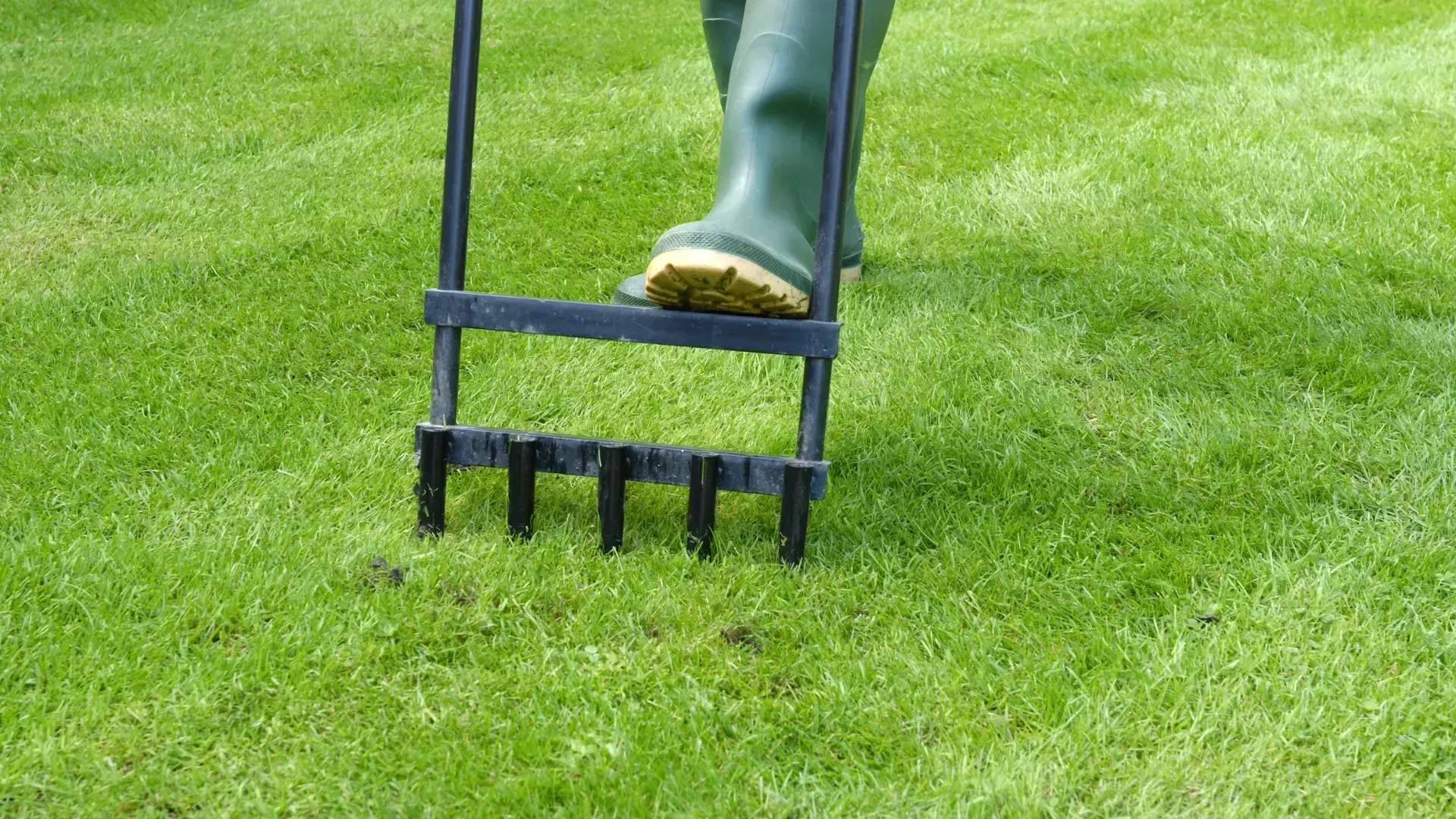
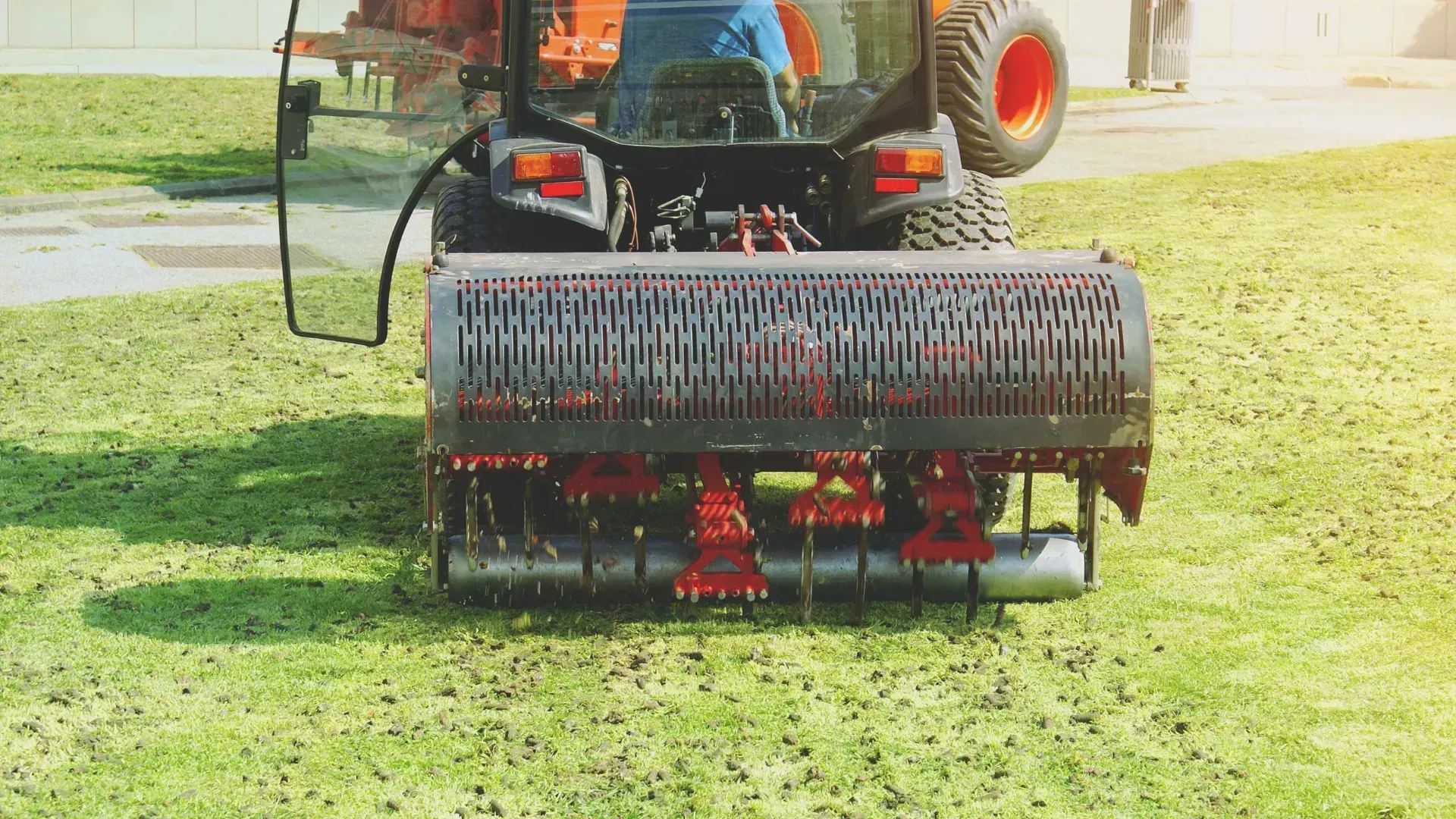
Core aeration removes small plugs of soil from the turf instead of simply poking holes into the surface. Those openings create temporary channels that improve the movement of air, water, and nutrients into the root zone.
UGA Cooperative Extension explains that core aeration improves water, nutrient, and air movement and can help stimulate organic matter decomposition. Our commercial lawn aeration service uses professional-grade core aeration equipment designed for larger commercial properties and HOA common areas.
Core aeration helps by:
- Relieving compacted soil
- Improving water infiltration
- Improving oxygen movement into the root zone
- Giving roots room to expand
- Improving fertilizer access to the soil
- Helping turf recover from traffic stress
- Creating better seed-to-soil contact when overseeding
Why Fertilizer Alone Does Not Fix Compacted Clay
A property manager can spend more on fertilizer and still see disappointing turf if the soil underneath is too dense for roots to use those nutrients efficiently. Fertilizer is not a mechanical solution to a physical soil problem.
UGA Cooperative Extension describes healthy soil structure as essential to root development. When clay becomes hardened and compacted, the better response is to improve the physical condition of the root zone. That may include aeration, and on some properties, topdressing or overseeding in addition to the normal maintenance program.
August Changes the Aeration Decision by Grass Type
Timing matters because warm-season and cool-season grasses do not respond to aeration at the same point in the year. Our Atlanta commercial aeration guidance separates those turf types for exactly that reason.
UGA Cooperative Extension recommends aerating when roots are actively growing. For warm-season turf such as Bermuda and Zoysia, the strongest recovery window is generally during active warm-season growth. Tall Fescue is handled differently, with late summer into early fall becoming a more important aeration and overseeding window.
August planning depends on the turf:
- Bermuda: Usually past the primary aeration window, so we evaluate before aggressive work
- Zoysia: Similar to Bermuda, active growth and recovery capacity matter
- Centipede: Schedule around active growth and current stress
- Tall Fescue: August can be the beginning of the aeration and overseeding planning window
- Mixed turf: Identify the dominant grass before scheduling
The right timing is based on turf type and condition, not simply the month on the calendar.
Aeration vs. Drainage: Know Which Problem You Actually Have
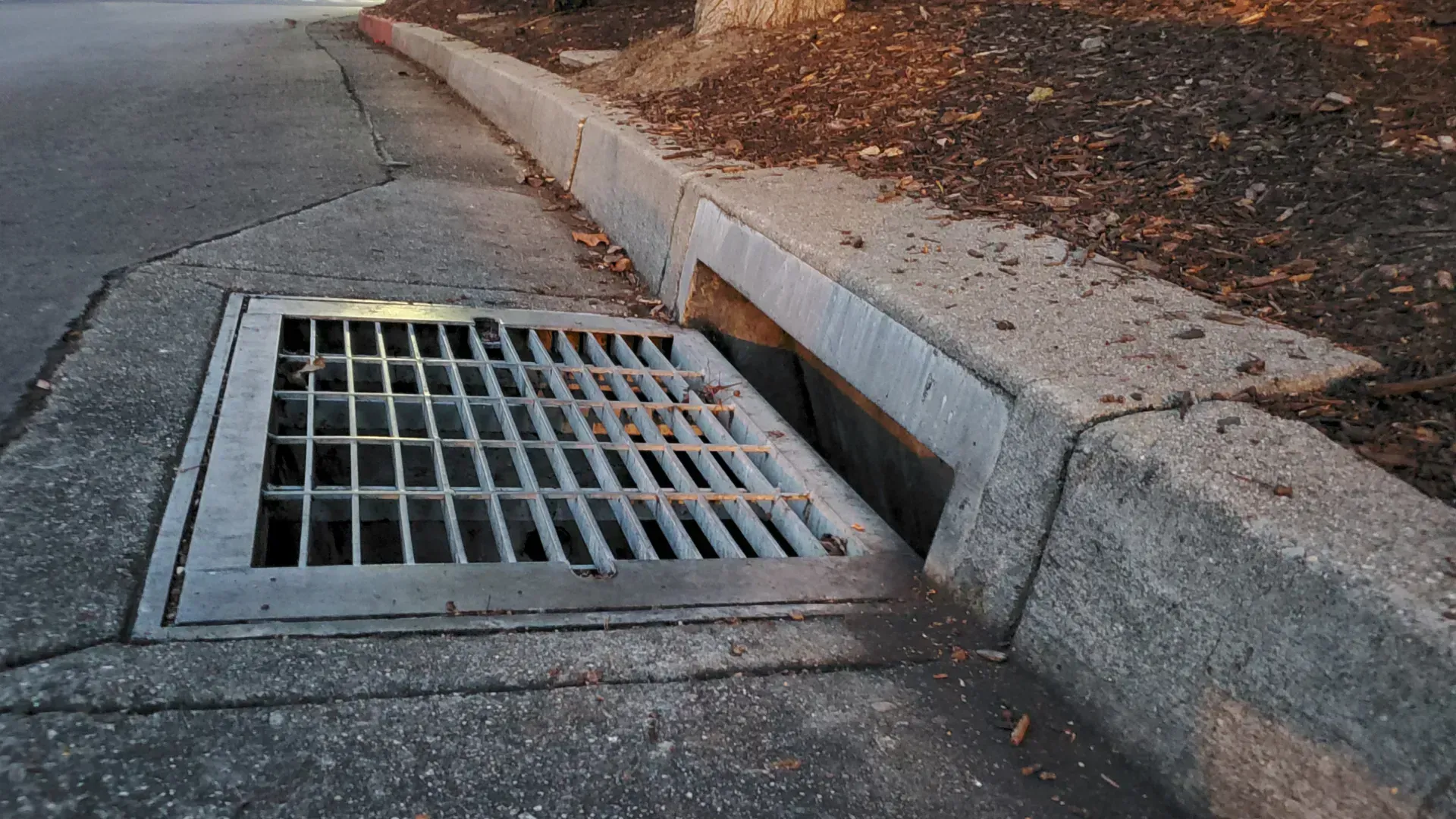
Standing water does not automatically mean the property only needs aeration. UGA Cooperative Extension notes that compacted soil can limit water penetration, but grading problems, concentrated roof runoff, failed catch basins, low areas, or poorly routed downspouts may require an actual drainage solution.
Aeration is more likely to help when:
- Soil is hard and dense
- Water sits briefly on compacted turf
- Turf roots are shallow
- Traffic patterns match the weak areas
- The lawn improves slowly after irrigation
Drainage work is more likely when:
- Water repeatedly collects in the same low area
- Runoff flows toward buildings or pavement
- Downspouts discharge into problem zones
- Erosion is developing
- Large puddles remain long after rainfall
YardSmith handles both aeration and
commercial drainage solutions, which matters because opening compacted soil will not correct a grading or stormwater-routing problem by itself.
What Does Commercial Lawn Aeration Cost in Greater Atlanta?
There is no responsible flat price for commercial lawn aeration in Greater Atlanta because commercial properties vary too much in acreage, access, turf type, obstacles, traffic, and the number of services being combined. YardSmith prices aeration based on the property and scope rather than advertising one residential-style per-lawn number.
The cost decision should also consider whether aeration is being paired with overseeding, dethatching, topdressing, or another turf improvement. A simple core-aeration pass is a different project from a broader renovation program.
What Changes Commercial Aeration Cost?
| Cost Factor | Why It Matters |
|---|---|
| Turf area | Larger HOA and commercial grounds require more labor |
| Access | Gates, slopes, courtyards, and obstacles affect equipment time |
| Number of passes | Severe compaction may require more coverage |
| Soil condition | Dense, heavily trafficked clay can take more work |
| Overseeding | Seed application adds material and labor |
| Dethatching | Heavy thatch may require separate preparation |
| Topdressing | Compost or amendment adds another service layer |
| Irrigation layout | Heads and utilities must be identified and protected |
| Property scheduling | Multi-phase work around tenants or residents adds coordination |
The best quote starts with the actual turf area and the result the property needs. We can determine whether the lawn needs core aeration alone or whether combining services provides better value.
Why Aeration Matters to Property Managers and HOA Boards
A healthier root zone can support:
- More consistent curb appeal
- Better recovery from resident and visitor traffic
- Reduced bare-soil exposure
- Better use of irrigation
- Better response to fertilizer
- Stronger seasonal turf recovery
- Fewer repeated complaints about common areas
That is why aeration fits YardSmith's broader
commercial property maintenance approach. We are not trying to make one lawn look good for a week. We are trying to keep the property performing across the season.
Frequently Asked Questions
Why does Georgia clay need aeration more often?
North Georgia's Piedmont commonly has clay-heavy subsoil that can become hardened and compacted. When traffic or equipment compresses that soil, the root zone becomes harder for air, water, nutrients, and roots to move through. Core aeration physically opens that compacted layer.
Is August a good time to aerate in Atlanta?
It depends on the turf. August can be part of the planning window for Tall Fescue aeration and overseeding, while Bermuda and Zoysia are usually handled during strong warm-season growth. We identify the turf type before recommending timing.
Does aeration fix standing water?
Sometimes it helps when surface water is caused by compacted soil that cannot absorb rainfall or irrigation efficiently. It will not correct grading, failed drains, concentrated downspout discharge, or a larger drainage design problem.
Should commercial aeration be combined with overseeding?
Often, especially on Tall Fescue properties or turf with thin coverage. Core aeration creates direct seed-to-soil contact and relieves compaction before seed is applied.
How much does commercial lawn aeration cost in Atlanta?
The price depends on turf area, access, compaction, number of passes, and whether aeration is combined with overseeding, dethatching, or topdressing. We quote commercial and HOA properties based on actual scope rather than using one flat residential price.
Treat Compaction Before It Becomes a Turf Replacement Problem
Recent Posts
Why Georgia's Heavy Clay Soil Makes Proper Drainage a Non-Negotiable for Atlanta Homeowners and HOAs